
Driving Growth Through Smart Digital Marketing
Search Engine Optimization (SEO)
Search Engine Optimization (SEO) ->
Is the practice of improving a website’s visibility in search engine results to attract more organic traffic. It helps businesses appear in front of potential customers when they search for relevant products, services, or information on Google. Effective SEO includes keyword research, creating valuable and engaging content, optimizing website pages, and improving the overall user experience. It also involves technical improvements such as faster page speed, mobile-friendly design, secure HTTPS connections, and a well-structured website. In addition, earning high-quality backlinks from trusted websites strengthens your domain authority, increases credibility, and helps achieve higher search rankings over time. A well-planned SEO strategy not only increases online visibility but also drives qualified traffic, builds long-term brand trust, and supports sustainable business growth without relying entirely on paid advertising.
How Search Engine Optimization (SEO) Works
Search Engine Optimization (SEO) is the process of improving a website so it can achieve higher rankings on search engines like Google and attract more organic visitors. It helps search engines understand your website’s content and evaluate its relevance for users searching online.
SEO works through three essential stages. The first is Crawling, where search engine bots discover and scan the pages of your website. The second is Indexing, where the collected information is organized and stored in Google's database. The final stage is Ranking, where search engines determine the most relevant pages to display based on search queries, content quality, and user experience.
To improve SEO performance, businesses should focus on keyword optimization, publish valuable and original content, improve website speed, ensure mobile responsiveness, and maintain a secure website. Earning high-quality backlinks from trusted websites also strengthens domain authority and improves search visibility.
A well-executed SEO strategy increases online visibility, drives qualified organic traffic, improves user experience, builds long-term credibility, and helps businesses generate consistent leads and sustainable growth without relying solely on paid advertising.
Types of SEO That Drive Business Growth

On Page SEO
Off Page SEO
Technical SEO
Local SEO
What is On Page SEO ?
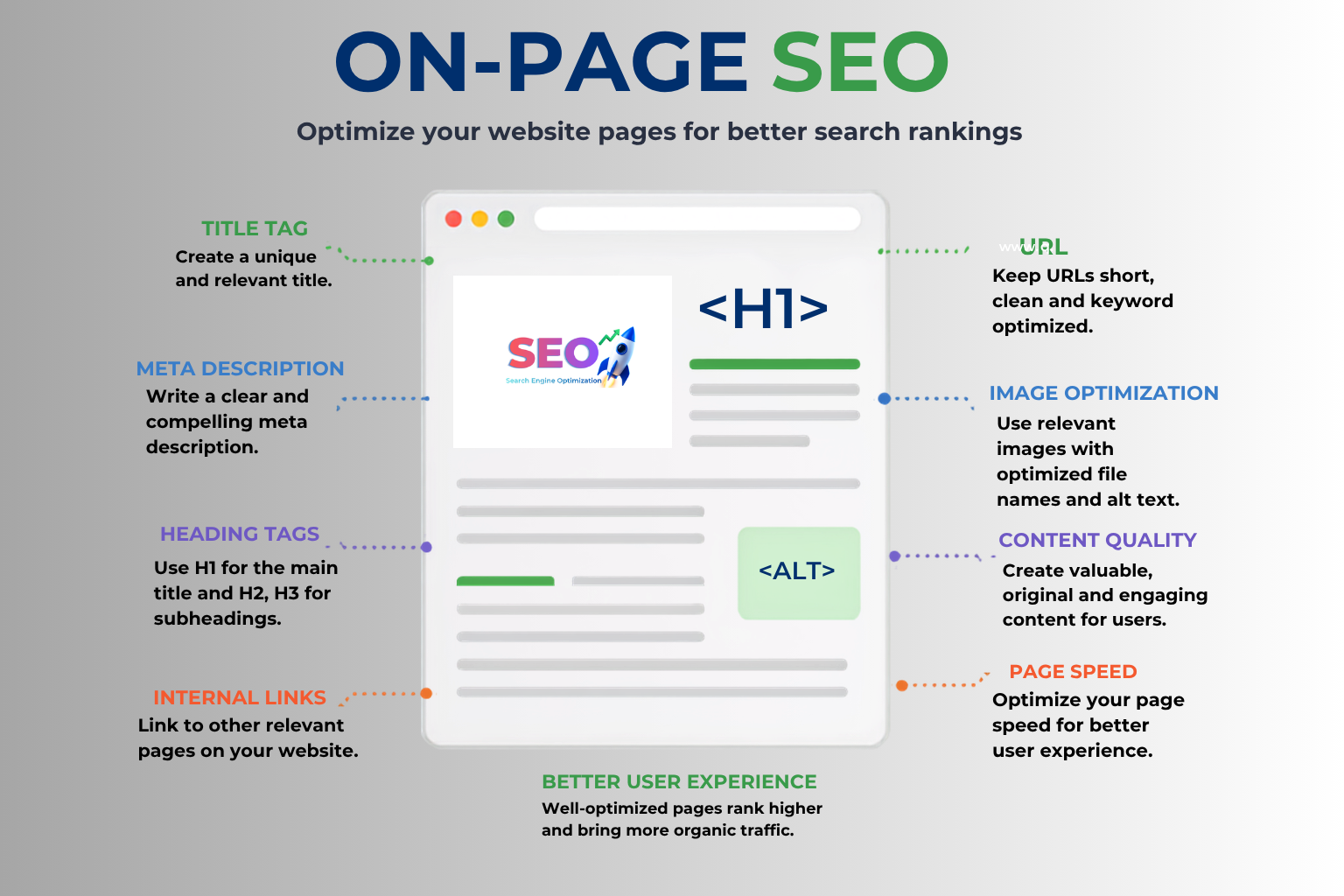
On-Page SEO is the foundation of a successful search engine optimization strategy. It focuses on optimizing every important element within a website to improve its visibility, relevance, and overall performance in search engine results. By refining page content, website structure, and technical elements, On-Page SEO helps search engines understand your website more accurately while delivering a better experience to visitors.A strong On-Page SEO strategy includes keyword optimization, engaging and informative content, well-structured headings, optimized title tags, compelling meta descriptions, clean URLs, image optimization, and strategic internal linking. Every page is carefully designed to provide value to users while aligning with modern search engine algorithms.Beyond improving rankings, On-Page SEO enhances website speed, mobile responsiveness, readability, and navigation, creating a seamless browsing experience across all devices. These improvements increase user engagement, reduce bounce rates, and encourage visitors to spend more time exploring your website.When implemented correctly, On-Page SEO not only strengthens your online presence but also builds credibility, attracts qualified organic traffic.
Why is On-Page SEO important for websites?
On-Page SEO is the foundation of a successful search engine optimization strategy. It focuses on optimizing every important element within a website to improve its visibility, relevance, and overall performance in search engine results. By refining page content, website structure, and technical elements, On-Page SEO helps search engines understand your website more accurately while delivering a better experience to visitors.A strong On-Page SEO strategy includes keyword optimization, engaging and informative content, well-structured headings, optimized title tags, compelling meta descriptions, clean URLs, image optimization, and strategic internal linking. Every page is carefully designed to provide value to users while aligning with modern search engine algorithms.Beyond improving rankings, On-Page SEO enhances website speed, mobile responsiveness, readability, and navigation, creating a seamless browsing experience across all devices. These improvements increase user engagement, reduce bounce rates, and encourage visitors to spend more time exploring your website.When implemented correctly, On-Page SEO not only strengthens your online presence but also builds credibility, attracts qualified organic traffic, and supports long-term business growth by ensuring your website remains competitive in an ever-evolving digital landscape.
What is Off Page SEO ?
On-Page SEO -> Is the practice of optimizing individual web pages to improve their visibility in search engine results and provide a better experience for users. It helps search engines understand the purpose, relevance, and quality of your content, making it easier for your website to rank for targeted keywords. This process includes optimizing page titles, meta descriptions, headings, URLs, images, internal links, keyword placement, and content structure while ensuring that all elements work together effectively.
The primary objective of On-Page SEO is not only to achieve higher rankings but also to create a smooth, engaging, and valuable browsing experience for visitors. Well-written content, proper keyword optimization, fast page loading speed, mobile responsiveness, easy navigation, and clear website structure encourage users to stay longer, explore additional pages, and interact with your content. Search engines recognize these positive user signals, reward websites with improved rankings, increase organic traffic, strengthen online credibility, and support long-term business growth by delivering relevant and high-quality information to users.
Why is Off Page SEO important for websites ?
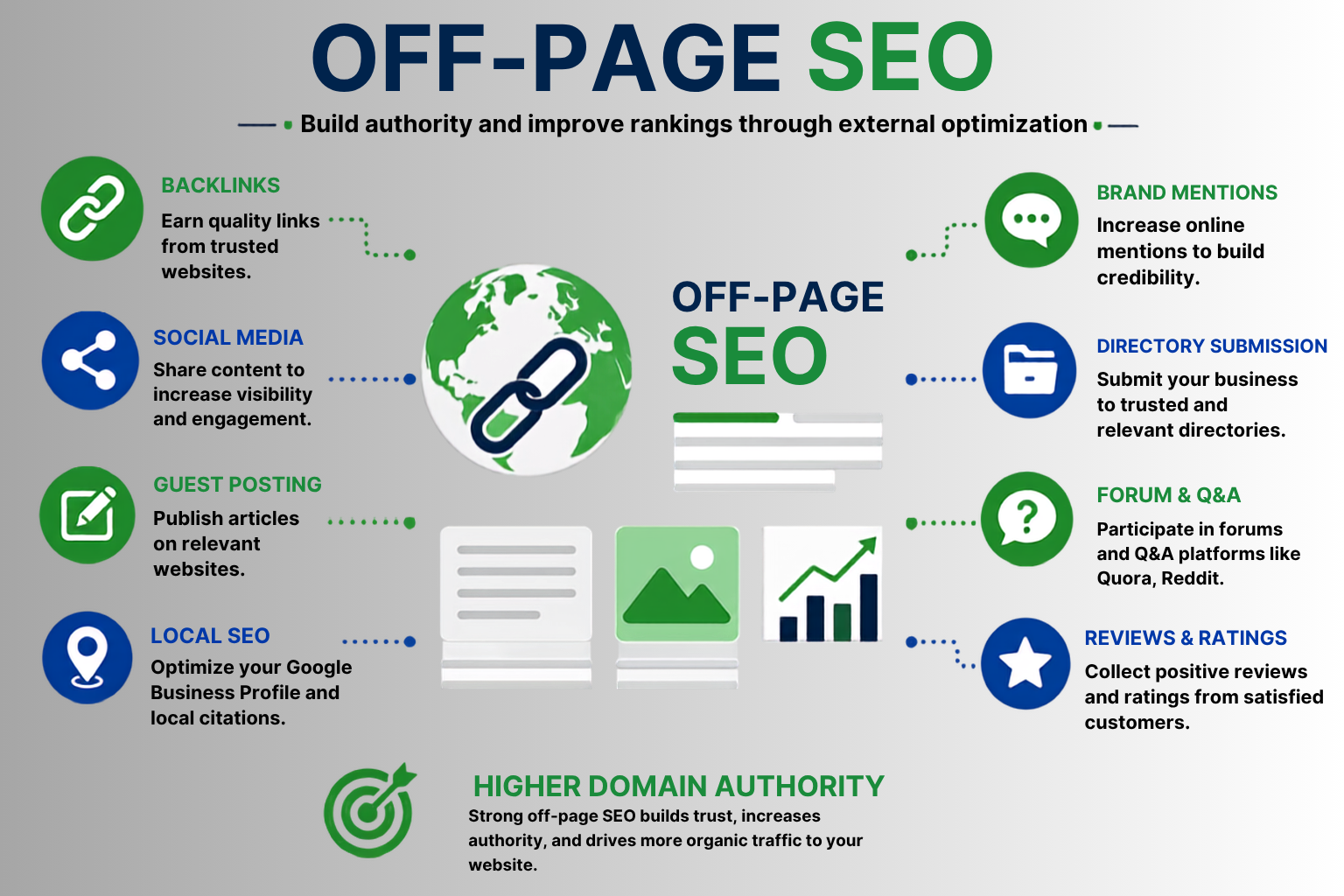
Off-Page SEO is essential because it helps improve your website’s authority, credibility, and reputation across the internet. Unlike On-Page SEO, which focuses on optimizing your website’s internal elements, Off-Page SEO strengthens your online presence through external signals such as high-quality backlinks, brand mentions, social media engagement, and digital PR. These factors help search engines recognize your website as a reliable and trustworthy source of information.A strong Off-Page SEO strategy increases your website’s domain authority, making it easier to compete for higher rankings in search engine results. Earning backlinks from reputable and relevant websites signals to search engines that your content is valuable and deserves greater visibility. This not only improves rankings but also drives high-quality referral traffic from trusted online sources.Beyond improving search visibility, Off-Page SEO enhances brand awareness, builds customer trust, and expands your digital reach. It helps businesses establish a strong online reputation, attract qualified visitors, increase lead generation, and create long-term growth opportunities. When combined with effective On-Page SEO, Off-Page SEO forms a powerful strategy that delivers sustainable organic traffic, stronger search performance, and long-lasting business success in a competitive digital marketplace.
What is Technical SEO ?
Technical SEO is the process of optimizing a website’s technical foundation to help search engines crawl, index, and rank its pages more efficiently. It focuses on improving the backend structure and performance of a website rather than its content. A technically optimized website ensures that search engines can easily access your pages while providing users with a fast, secure, and seamless browsing experience.Technical SEO includes important factors such as website speed optimization, mobile responsiveness, HTTPS security, XML sitemaps, robots.txt configuration, structured data (Schema Markup), canonical tags, URL structure, crawl error fixes, and Core Web Vitals optimization. These elements work together to improve website performance and make it easier for search engines to understand your site.A strong Technical SEO strategy enhances website usability, reduces loading times, improves indexing efficiency, and supports higher search rankings. It also creates a better user experience across all devices, helping businesses increase organic traffic, strengthen online credibility, and build a solid foundation for long-term SEO success in an increasingly competitive digital .
Why is Technical SEO important for websites ?
Technical SEO is the backbone of a high-performing website, ensuring that search engines can efficiently crawl, index, and rank your pages. Without a strong technical foundation, even high-quality content may struggle to achieve good search rankings. By optimizing your website’s technical elements, you make it easier for search engines to understand your content and deliver it to the right audience.A well-optimized website offers faster loading speeds, mobile-friendly responsiveness, secure HTTPS encryption, clean URL structures, XML sitemaps, and improved Core Web Vitals. These enhancements create a seamless browsing experience, reduce bounce rates, increase user engagement, and encourage visitors to spend more time on your website. Search engines reward websites that provide excellent performance and usability with better rankings and greater visibility.Technical SEO also helps identify and fix crawl errors, broken links, duplicate content, indexing issues, and other technical problems that can negatively impact search performance. By maintaining a technically sound website, businesses can improve organic traffic, strengthen online credibility, enhance website security, and build a solid foundation for long-term SEO success and sustainable digital growth.
What is Local SEO ?

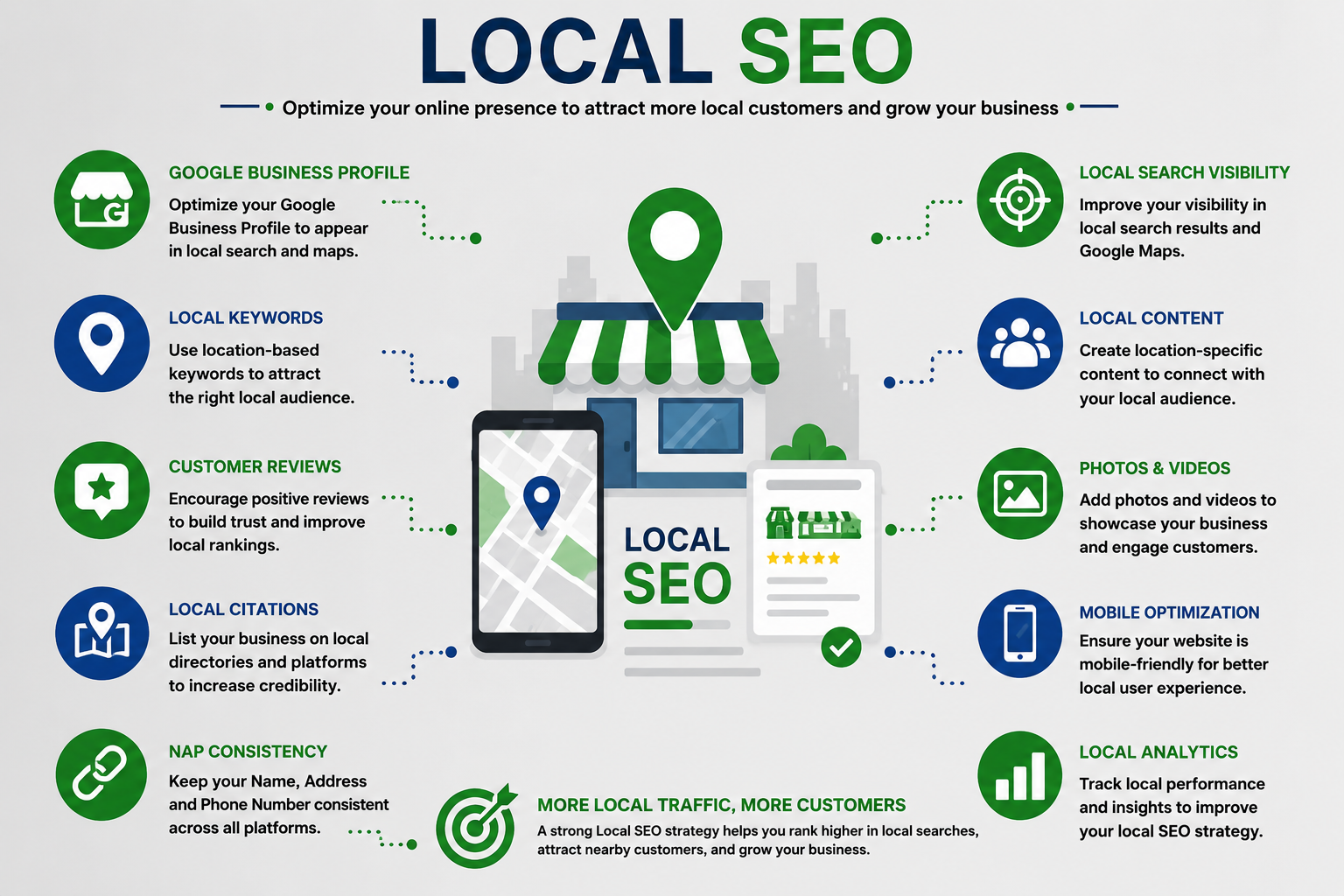
Local SEO (Local Search Engine Optimization) is the process of optimizing a business’s online presence to improve its visibility in local search results on Google and other search engines. It helps businesses appear when customers search for nearby products or services using location-based keywords such as "near me" or "best digital marketing agency in Delhi." Local SEO is especially valuable for businesses that serve customers within a specific city, region, or service area.A successful Local SEO strategy includes optimizing your Google Business Profile, maintaining consistent business information (Name, Address, and Phone Number), targeting local keywords, collecting customer reviews, building local citations, and creating location-specific content. These factors help search engines understand your business location and improve your chances of appearing in Google Search and Google Maps.By implementing Local SEO effectively, businesses can increase local visibility, attract nearby customers, generate more phone calls, drive store visits, and build stronger trust within their community. It is one of the most effective digital marketing strategies for improving local brand awareness, generating qualified leads, and achieving long-term business growth.
Why is Local SEO important for websites ?
Local SEO is essential for businesses that want to attract customers within a specific city, region, or service area. It helps your website appear in local search results when people search for nearby products or services. By optimizing your online presence for local searches, your business becomes more visible to potential customers who are actively looking for what you offer.A strong Local SEO strategy includes optimizing your Google Business Profile, using location-based keywords, maintaining consistent business information, collecting customer reviews, and building local citations. These factors improve your chances of appearing in Google Search and Google Maps, making it easier for nearby customers to discover and contact your business.Beyond improving local search rankings, Local SEO increases website traffic, generates qualified leads, drives more phone calls and store visits, and strengthens customer trust. It also enhances your brand’s credibility within the local community, helping your business stay ahead of competitors. With consistent Local SEO efforts, businesses can build a strong regional presence, attract high-intent customers, and achieve sustainable long-term growth in an increasingly competitive digital marketplace.
Techniques Of SEO ?



White Hat SEO -> Is an ethical approach to search engine optimization that follows Google's official guidelines and recommended practices. Its main purpose is to improve a website's ranking in search engine results through fair, legal, and long-term optimization techniques. This method focuses on creating unique, high-quality, and informative content that provides real value to users. It also includes the proper use of relevant keywords, improving website speed, ensuring mobile compatibility, and delivering a smooth user experience. Another important element is gaining backlinks from reliable and authoritative websites. Overall, White Hat SEO is a safe and effective strategy for increasing online visibility while maintaining a website's credibility, quality, and long-term search engine performance.
Black Hat SEO -> Refers to a search engine optimization technique that violates Google's guidelines and policies in an attempt to achieve higher rankings quickly. It relies on deceptive and manipulative practices rather than ethical optimization methods. Common Black Hat SEO techniques include keyword stuffing, cloaking, hidden text, duplicate or copied content, link farming, and purchasing low-quality backlinks to manipulate search engine algorithms. Although these methods may produce short-term improvements in rankings, they carry significant risks, including search engine penalties, lower visibility, or even complete removal of a website from search results. Therefore, Black Hat SEO is considered an unsafe and unreliable strategy because it focuses on exploiting search engines instead of providing genuine value and a positive experience for users.
Grey Hat SEO -> Is a s earch engine optimization approach that combines elements of both White Hat and Black Hat SEO. It uses techniques that are not directly prohibited by Google's guidelines but may operate in areas where the rules are unclear or open to interpretation. Common Grey Hat SEO practices include purchasing expired domains, excessive link exchanges, creating multiple websites for backlinks, and publishing content mainly to improve rankings rather than to help users. These methods may lead to faster ranking improvements than White Hat SEO, but they also involve a certain level of risk if search engine policies change or become stricter. Therefore, Grey Hat SEO is considered a moderate-risk strategy that can improve search visibility, but it does not provide the same level of long-term safety and reliability as White Hat SEO.