
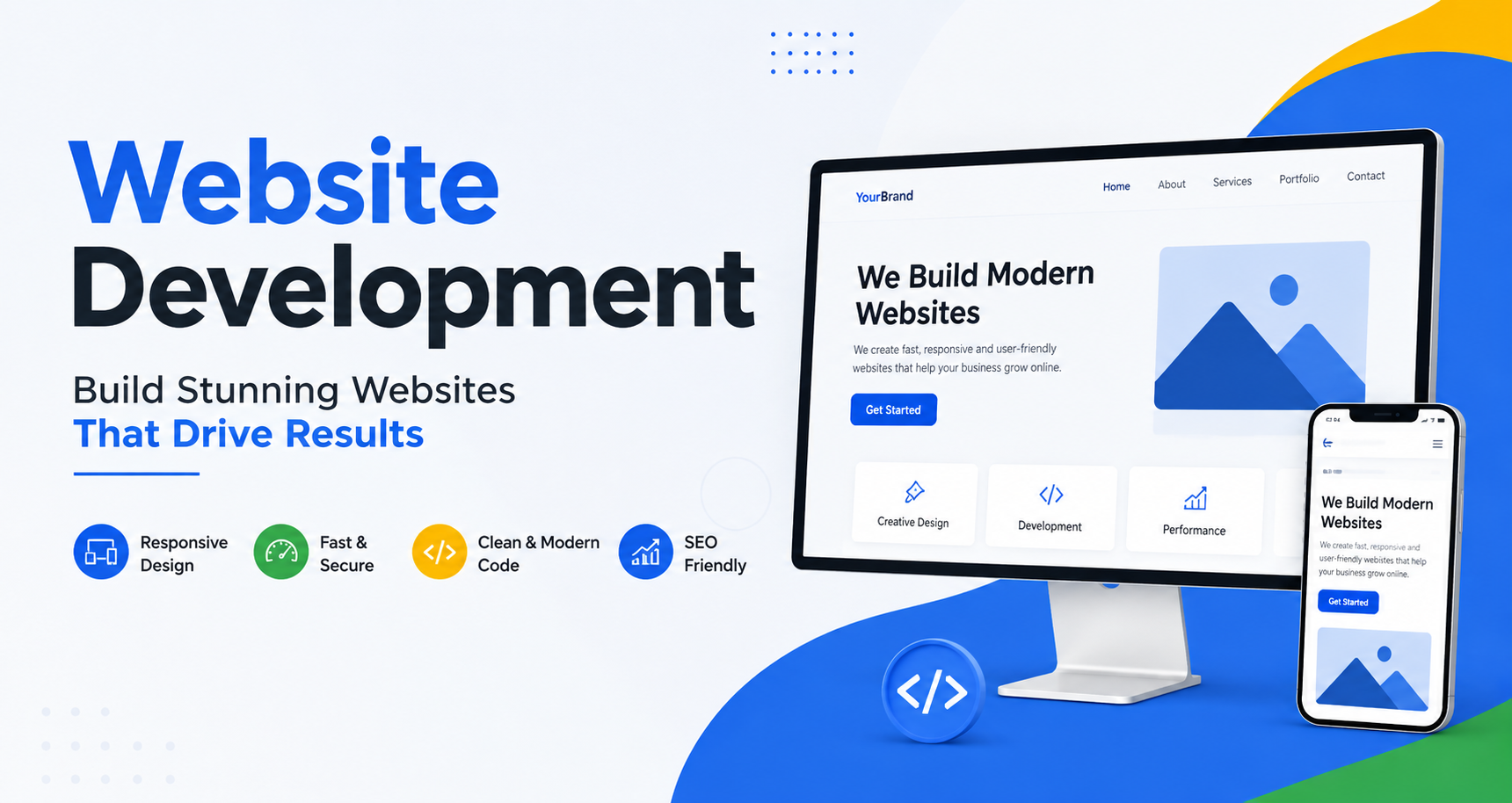
Kaifora Digitals builds websites that convert visitors into customers.
What Is Website Development ?
Website development -> is the process of creating, designing, building, and maintaining websites for the internet. It includes developing simple web pages, business websites, e-commerce stores, and web applications. This process helps businesses and individuals establish a strong online presence while reaching a wider audience and improving digital visibility.
The process begins with planning the website structure, layout, colors, branding, and user interface to ensure an engaging experience. Developers then use technologies such as HTML, CSS, and JavaScript to build the front-end that users interact with, while back-end development manages servers, databases, and website functionality using programming languages like PHP, Python, or Node.js.
Modern website development also emphasizes mobile responsiveness, search engine optimization (SEO), website security, fast loading speed.
Who Is Website Developer?
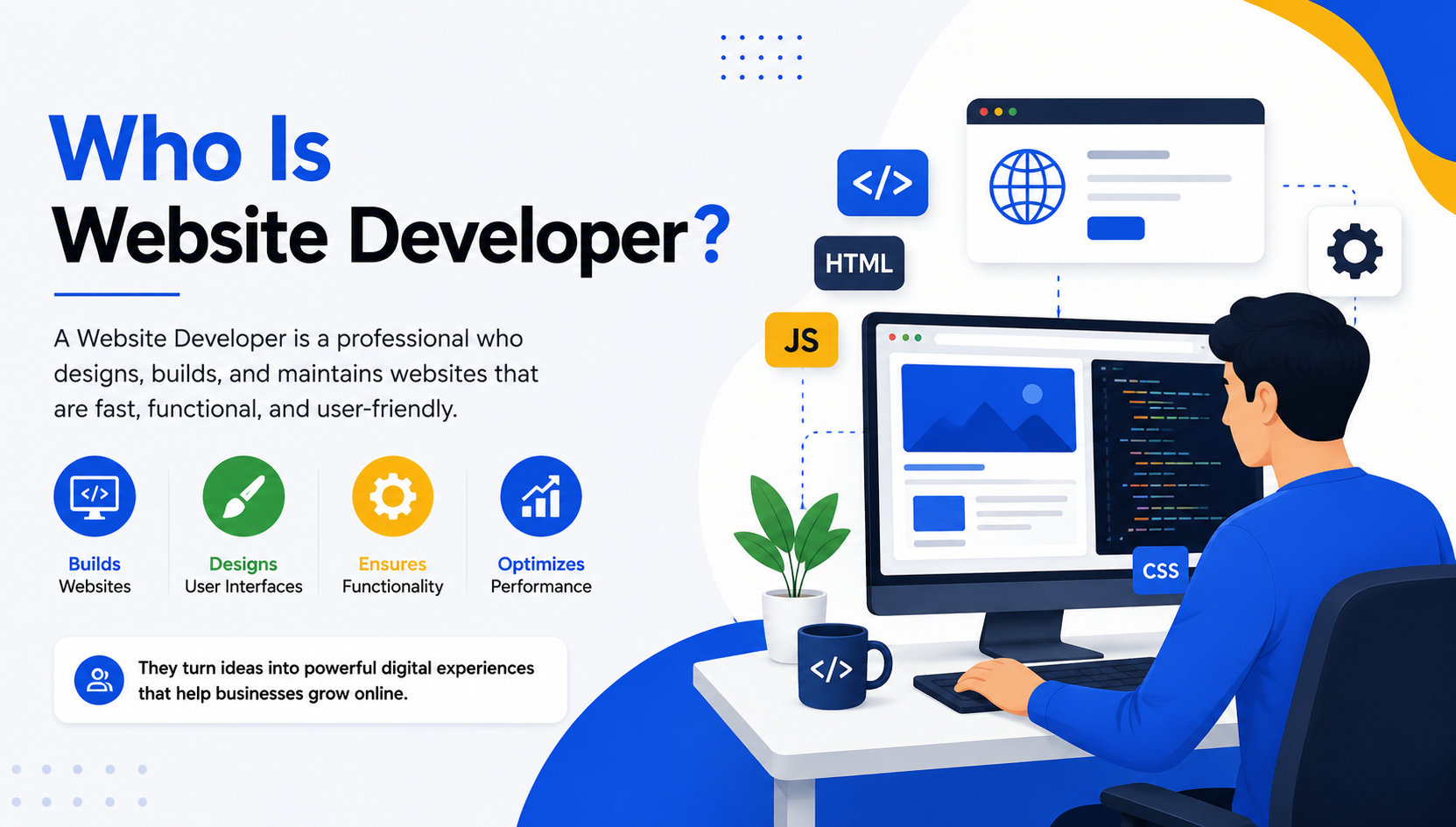
A Website Developer -> is a professional who designs, builds, and maintains websites to ensure they are visually appealing, functional, and user-friendly. Using programming languages and modern web technologies, developers create websites that perform smoothly across desktops, tablets, and mobile devices while delivering an excellent user experience.
Website developers are generally categorized into front-end, back-end, and full-stack developers. Front-end developers focus on the visual design and interactive elements of a website using HTML, CSS, and JavaScript, while back-end developers manage servers, databases, APIs, and website functionality using technologies such as PHP, Python, or Node.js. Full-stack developers possess expertise in both front-end and back-end development, allowing them to build complete web solutions.
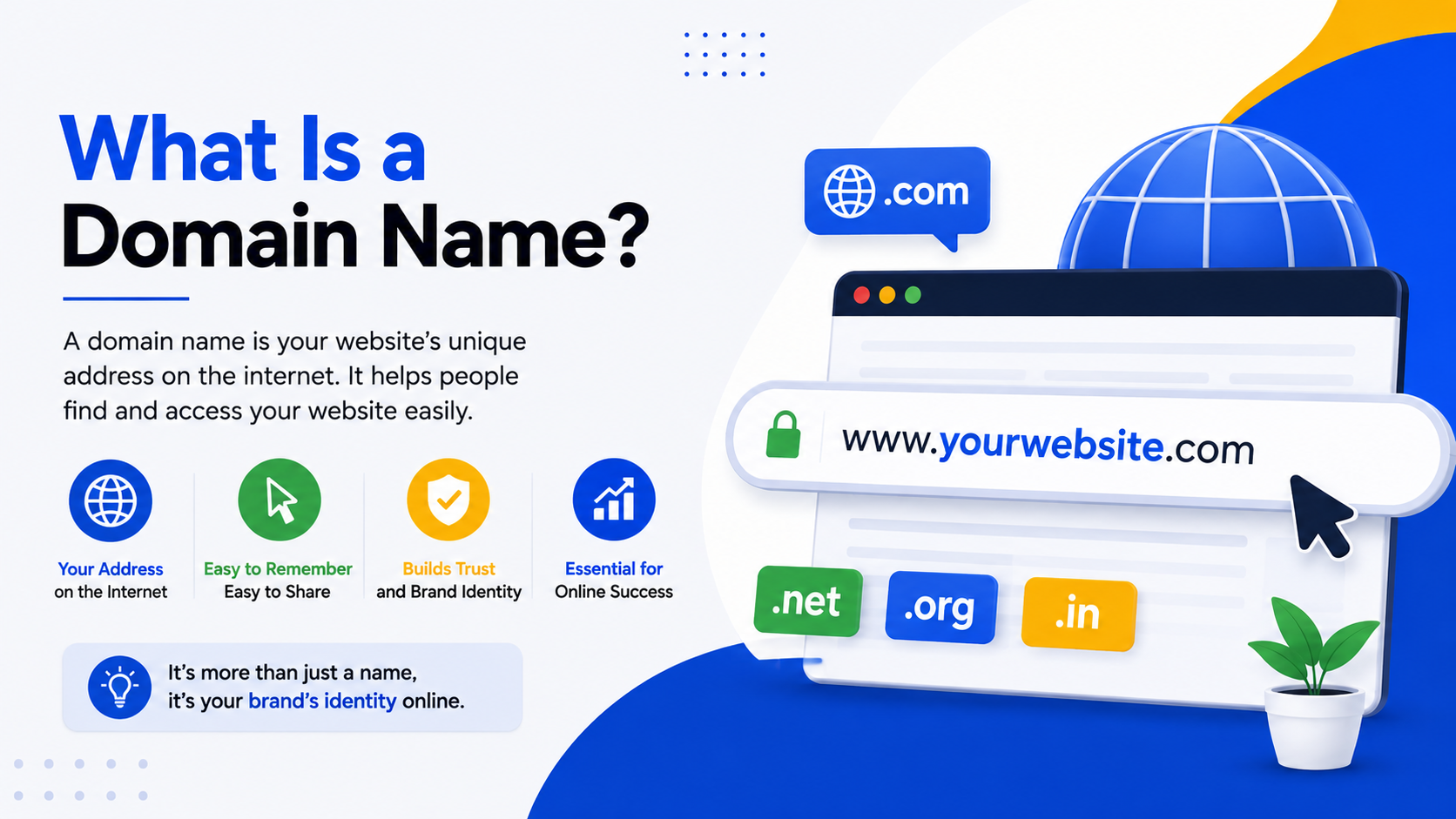

What Is a Domain Name ?
What Is Domain Hosting?
1. Your Website's Unique Address ->
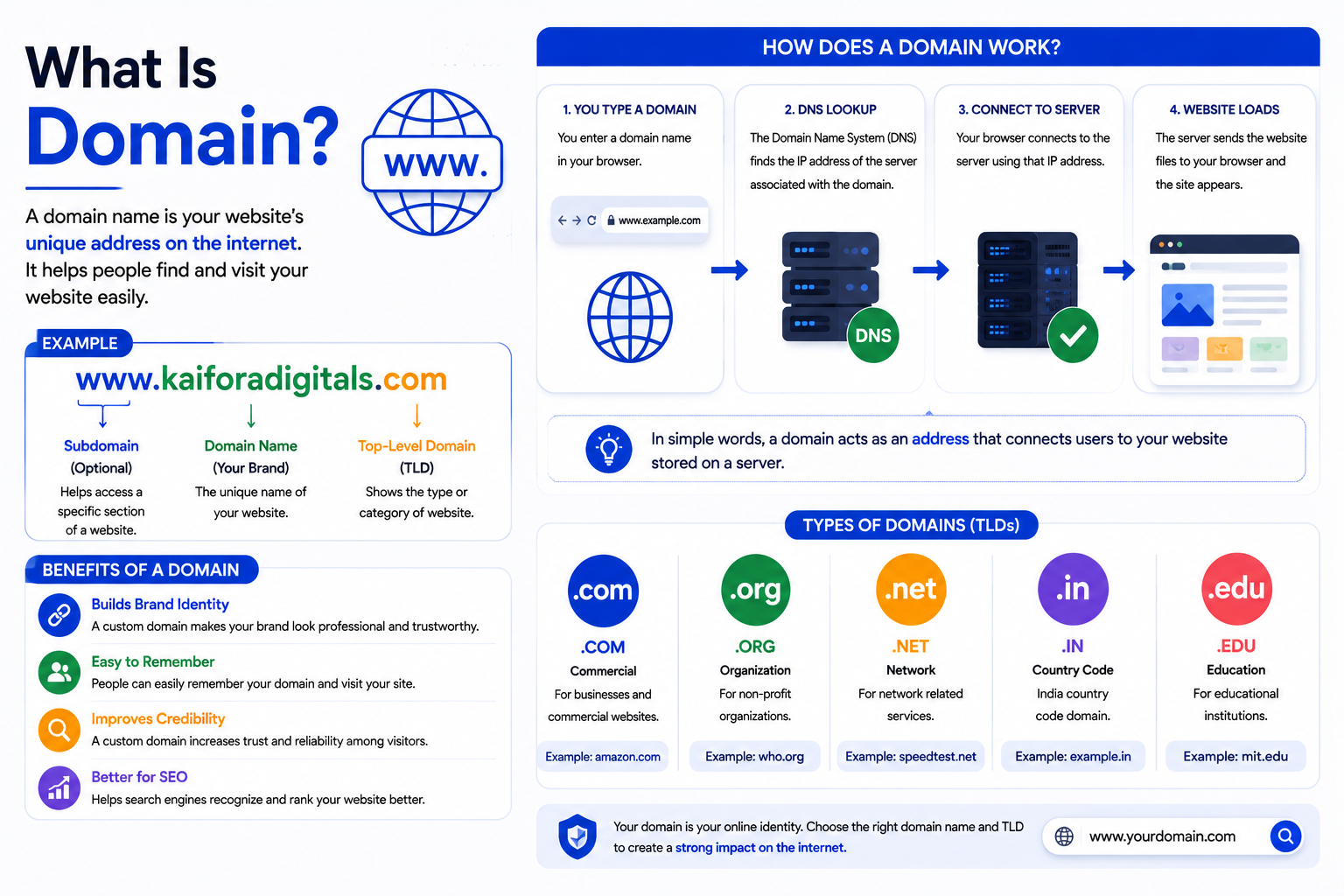
A domain name is the unique web address that people type into a browser to visit your website, such as www.kaiforadigitals.com. It makes websites easy to find and remember.
2. Replaces Complex IP Addresses ->
Every website has a numerical IP address, but domain names replace those difficult numbers with easy-to-read names, making internet navigation simple for users.
3. Builds Brand Identity ->
A professional domain name strengthens your brand, increases credibility, and helps customers recognize and trust your business online.
4. Improves Online Visibility ->
A relevant and memorable domain name supports digital marketing efforts, improves brand recall, and can contribute to better search engine visibility.
5. Requires Registration ->
A domain name must be registered through a domain registrar and renewed regularly to maintain ownership and keep your website accessible. ensuring the website remains active and accessible online.
1. Stores Your Website Files ->
Domain hosting (commonly called web hosting) is the service that stores your website's files, images, databases, and content on a secure server connected to the internet.
2.MakesYourWebsiteAccessible ->
Hosting allows visitors to access your website anytime, from anywhere in the world, by delivering your website files whenever someone enters your domain name.
3. Provides Website Performance ->
A good hosting service ensures fast loading speeds, reliable uptime, strong security, and smooth website performance for a better user experience.
4. Supports Website Features ->
Web hosting includes essential features such as email accounts, databases, SSL certificates, backups, storage space, and technical support to keep your website running efficiently.
5. Essential for Going Live ->
A domain name gives your website an address, while hosting provides the server where your website lives.
Types of Hosting Every Website Owner Should Know

Shared Hosting
Web Hosting
Dedicated Hosting
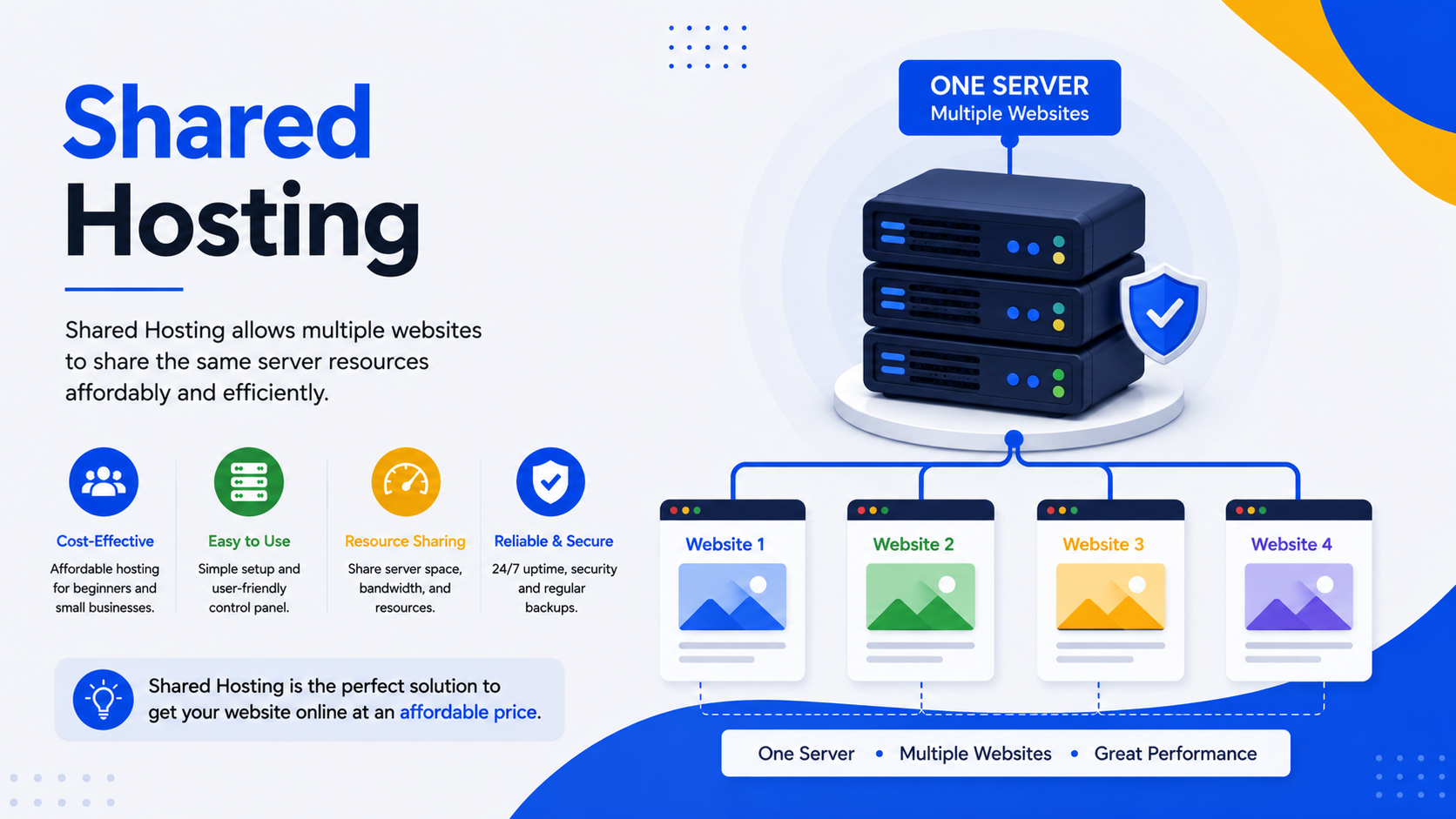
Shared hosting is a budget-friendly hosting service where multiple websites share the same server resources. It is best for beginners, small websites, and blogs because it is easy to use and affordable.
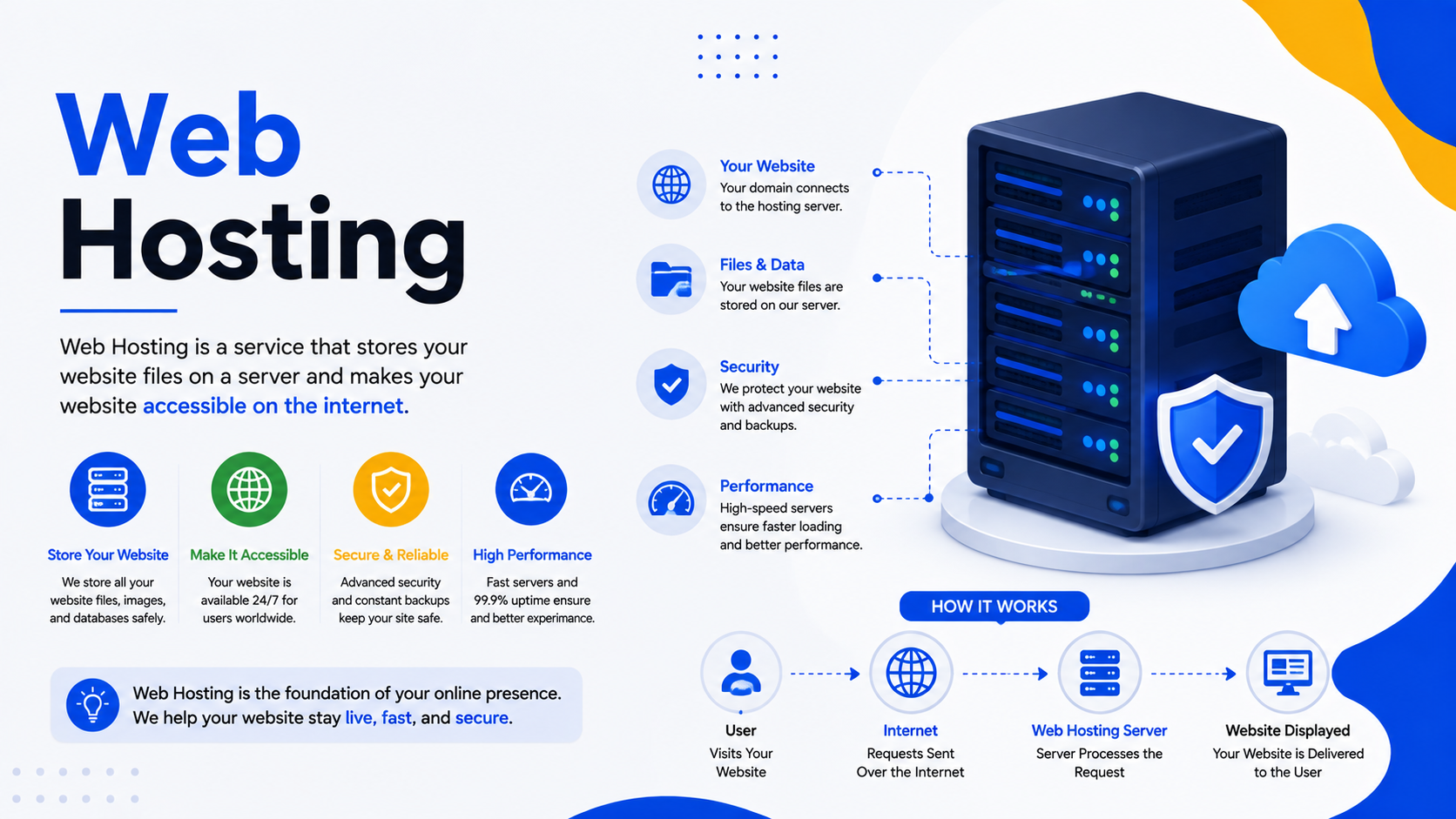
Web hosting is a service that puts your website on the internet. It helps your website stay online, load fast, and stay secure. Good hosting also gives ensuring the website remains active and accessible online.
Dedicated hosting gives a complete server to one website only. It offers high performance, strong security, and full control, making it ideal for large businesses and high-traffic websites.
VPS Hosting
CMS Hosting
WordPress Hosting
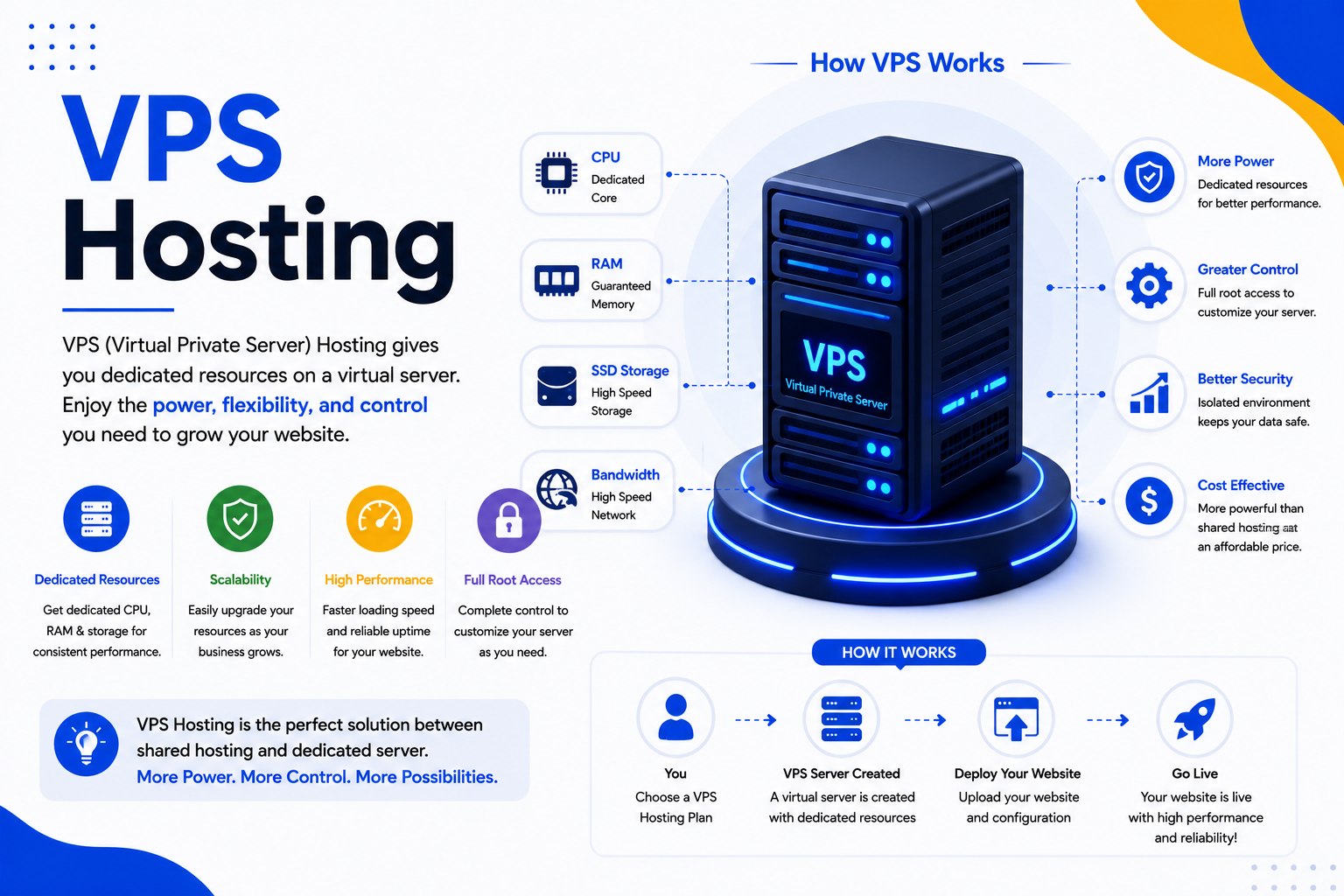
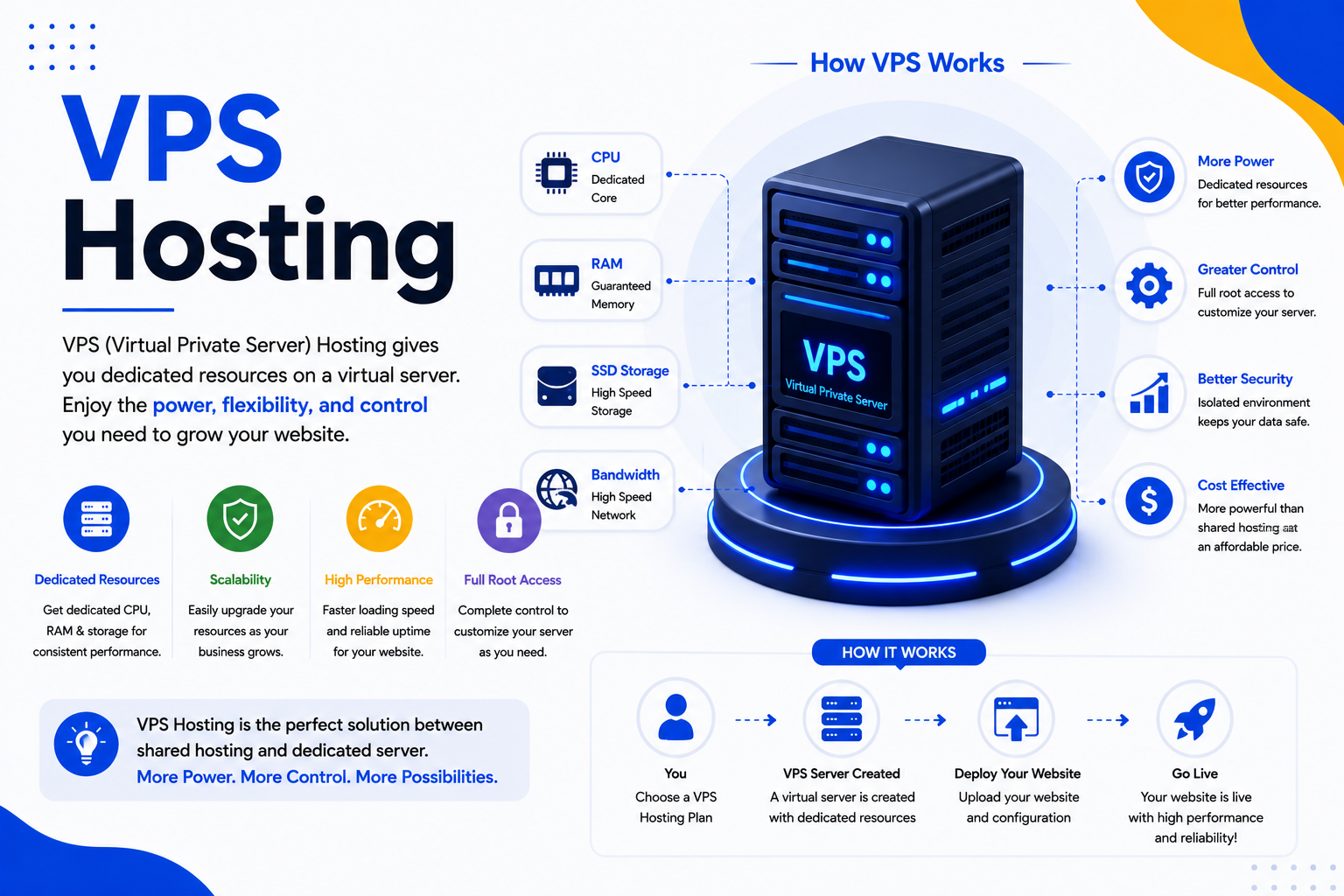
VPS hosting provides a virtual private server with dedicated resources. It offers better speed, security, and performance than shared hosting, making it suitable for growing websites and businesses.
CMS hosting is a special hosting service made for content management systems like WordPress, Joomla, and Drupal. It gives fast speed, better security, easy setup, automatic updates, and smooth performance .
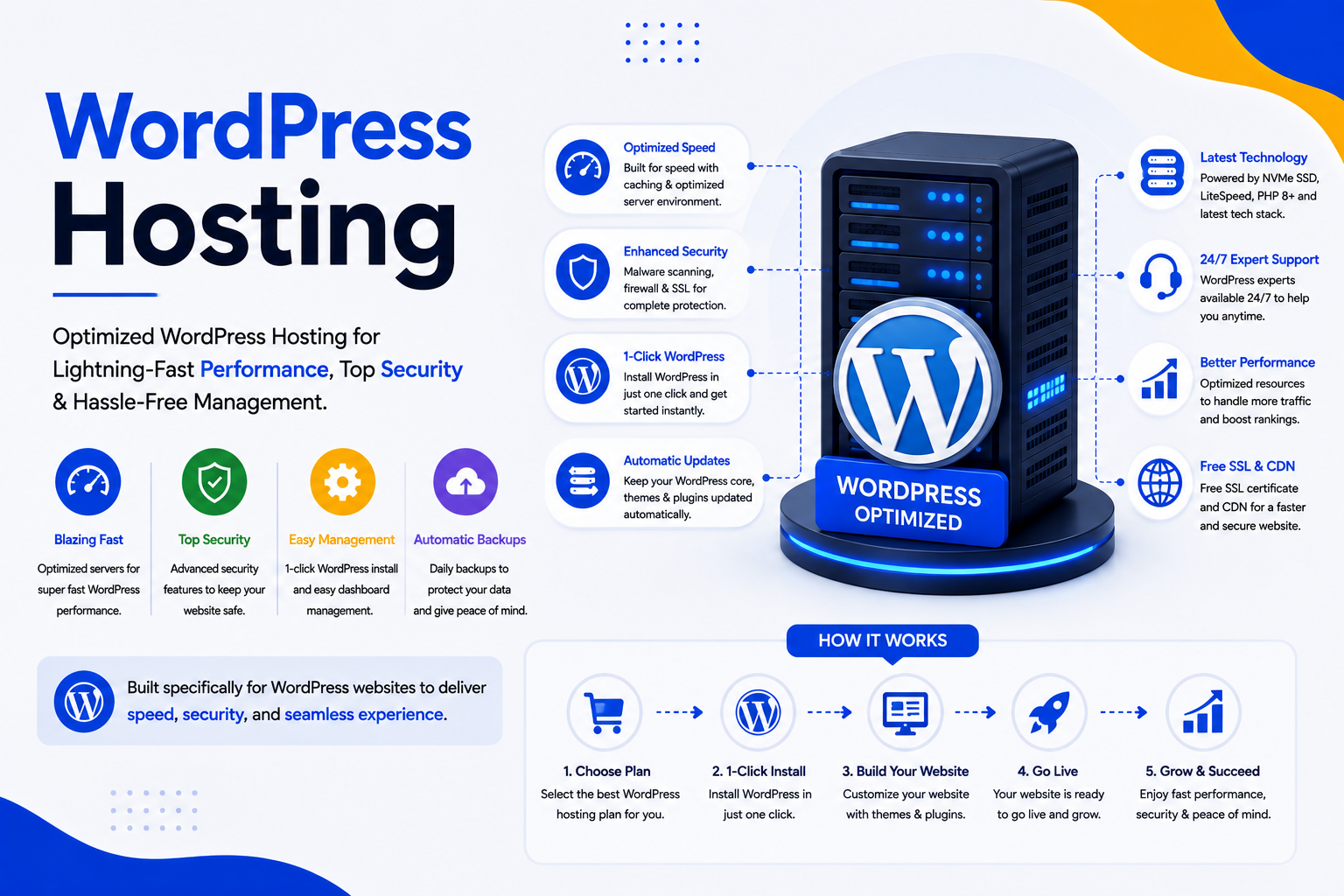
WordPress hosting is specially designed for WordPress websites. It offers better speed, security, automatic updates, and easy management, making it perfect for bloggers and WordPress users.
What Is Sub Domain ?
A subdomain is an extension of your main domain that helps organize different sections of a website under the same primary domain. For example, if your main domain is kaiforadigitals.com, a subdomain could be blog.kaiforadigitals.com or shop.kaiforadigitals.com. Subdomains are commonly used for blogs, online stores, support centers, or separate business services. They allow businesses to manage content efficiently while maintaining the identity and authority of the main website.
Subdomains function as independent sections of a website and can have their own unique design, content, applications, and functionality while remaining connected to the primary domain. They are especially useful for businesses that offer multiple services or want to separate different types of content without purchasing a new domain name. For example, an e-commerce business may use a dedicated subdomain for its online store, while a company may host its customer support center or knowledge base on another subdomain.
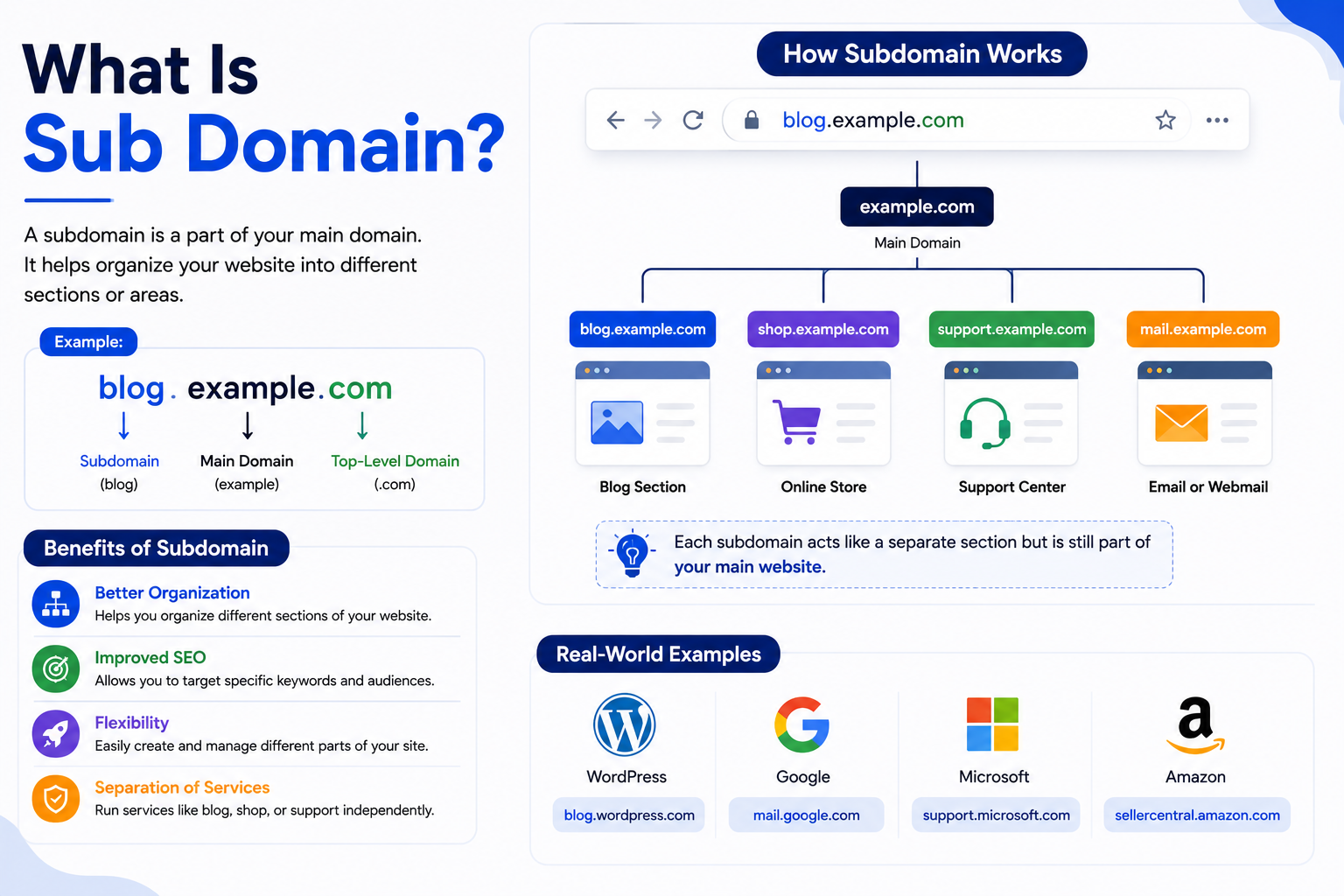
Domain vs Subdomain: Understanding the Key Differences
Domain
Sub - Domain

1] A domain is the main address of a website
2] It helps users access websites easily on the internet
3] A domain is unique for every website
4] It represents the identity of a business or brand online
5] Domains are purchased from domain registrars
6] Common domain extensions are .com, .in, .org, and .net.
7] A domain connects users to a web server
8] It is mainly used for the primary website
9] Example of a domain: google.com
10] Without a domain, users would need to use IP addresses to open websites.
1] A subdomain is a part of the main domain
2] It is created under an existing domain
3] Subdomains help organize different sections of a website
4] They are commonly used for blogs, support pages, and stores
5] A subdomain does not need to be purchased separately
6] It works as an extension of the main domain
7] Subdomains can have different content from the main website
8] Example of a subdomain: blog.google.com
9] Multiple subdomains can be created under one domain
10]Subdomains help improve website management and structure
What Is Website ?

A website is a collection of interconnected web pages that are stored on a web server and accessed through the internet using a domain name. It serves as a digital platform where individuals, businesses, organizations, and institutions can share information, showcase products or services, communicate with customers, and establish a strong online presence. Websites can range from simple informational pages to complex e-commerce stores, business portals, blogs, educational platforms, and web applications designed to meet different user needs.
A website consists of various elements such as text, images, videos, graphics, forms, navigation menus, and interactive features that work together to provide a seamless user experience. Modern websites are built using technologies like HTML, CSS, JavaScript, and back-end programming languages such as PHP, Python, or Node.js. Modern websites also use databases, APIs, content management systems, and security features to manage information, improve performance, protect user data, and deliver reliable services
Types Of Website

Static Website
Dynamic Website
Responsive Website
A static website is a simple type of website where the content remains fixed and does not change automatically. Every user sees the same information on the website. Static websites are mainly created using HTML, CSS, and sometimes JavaScript.
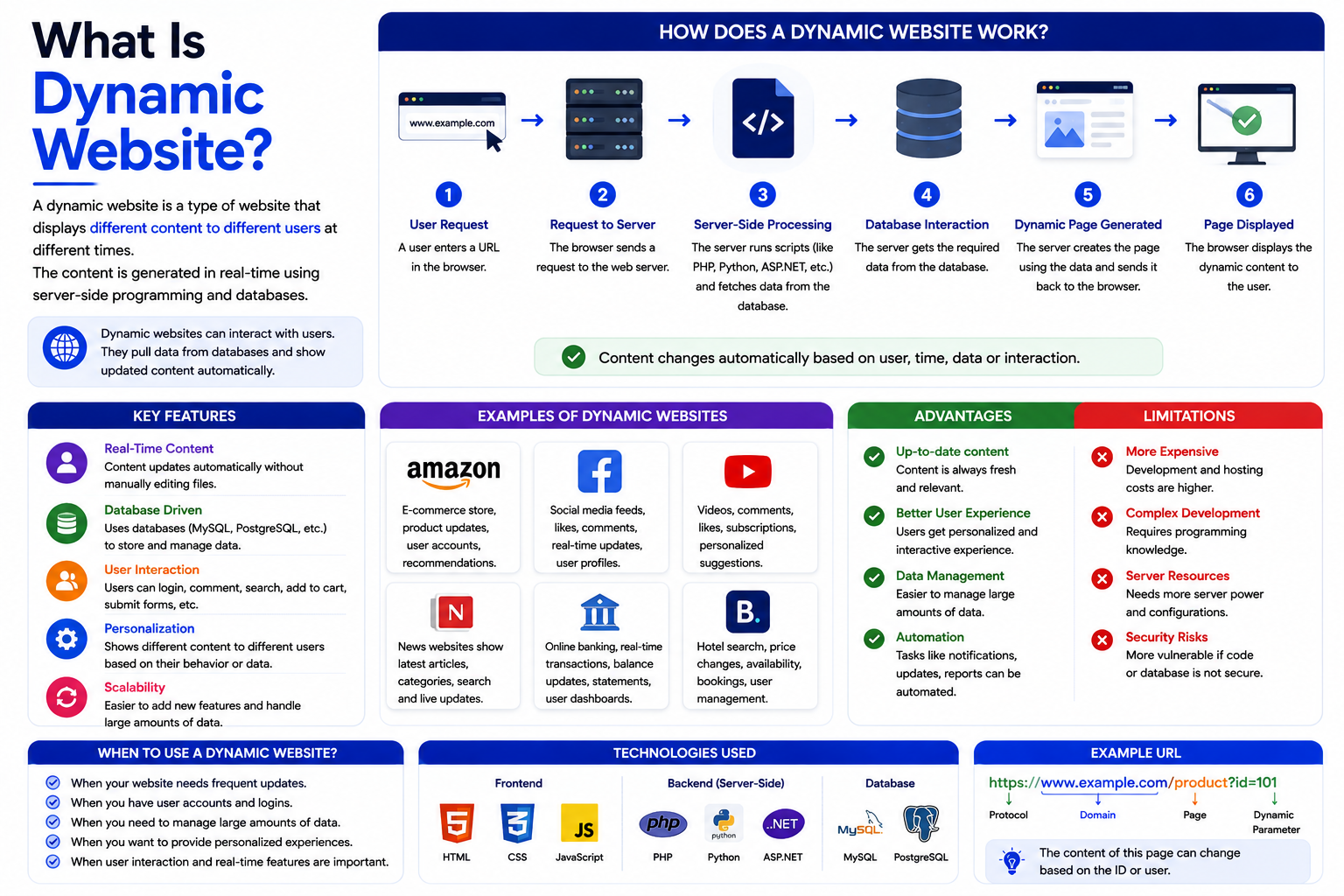
A dynamic website is a website whose content changes automatically according to user interaction, database updates, or other conditions. Dynamic websites are more interactive and advanced compared to static websites.
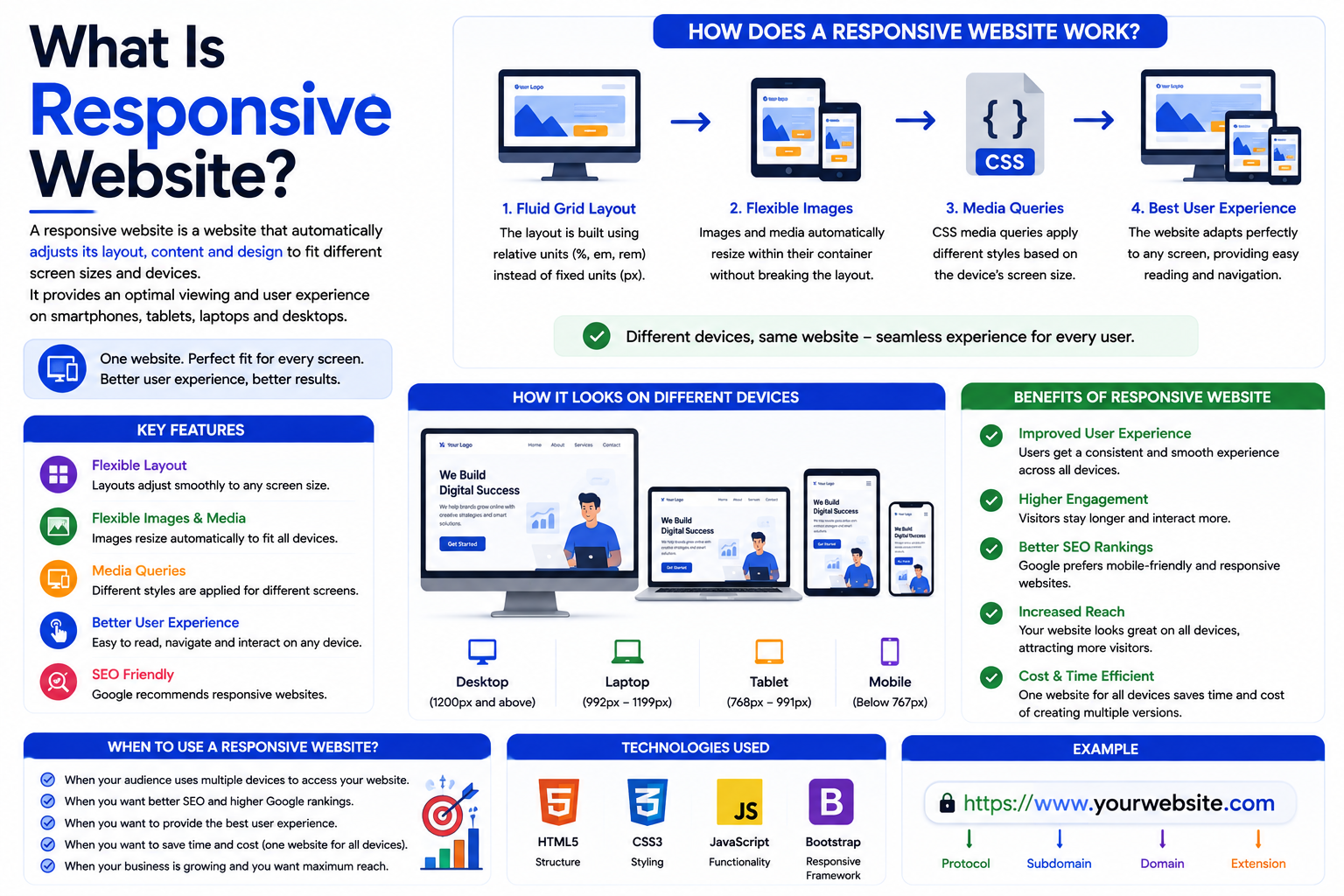
A responsive website is a website that automatically adjusts its layout and design according to the screen size of the device being used. It works properly on mobile phones, tablets, laptops, and desktop computers.
Categories of Websites
Portfolio Website
Blog Website
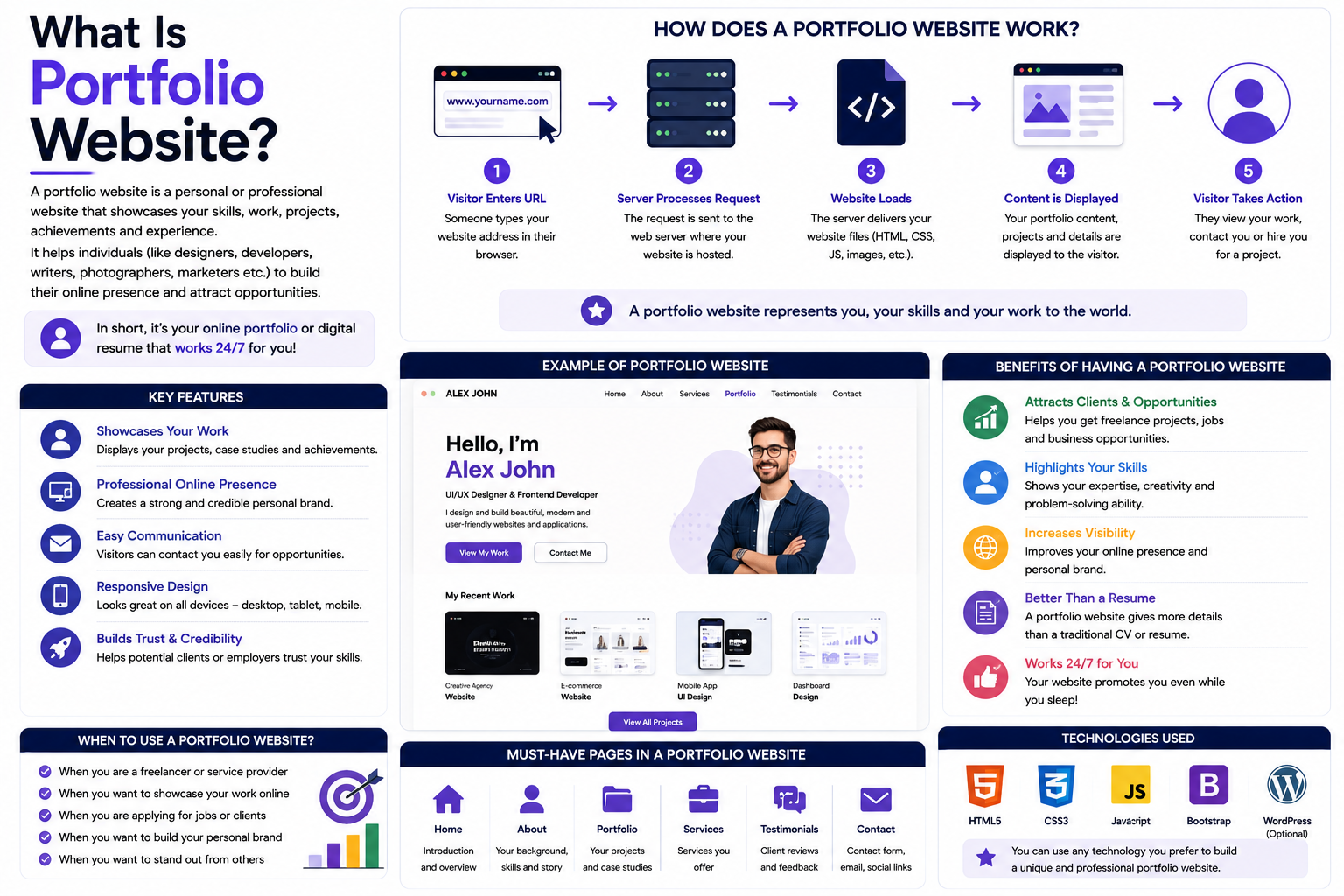
A portfolio website is created to showcase personal skills, projects, achievements, and creative work. It is commonly used by designers, developers, photographers, freelancers, and artists. Portfolio websites help professionals display their work online and attract clients or job opportunities through an impressive digital presentation.
Examples:-
Designer portfolio websites
Freelancer portfolio websites
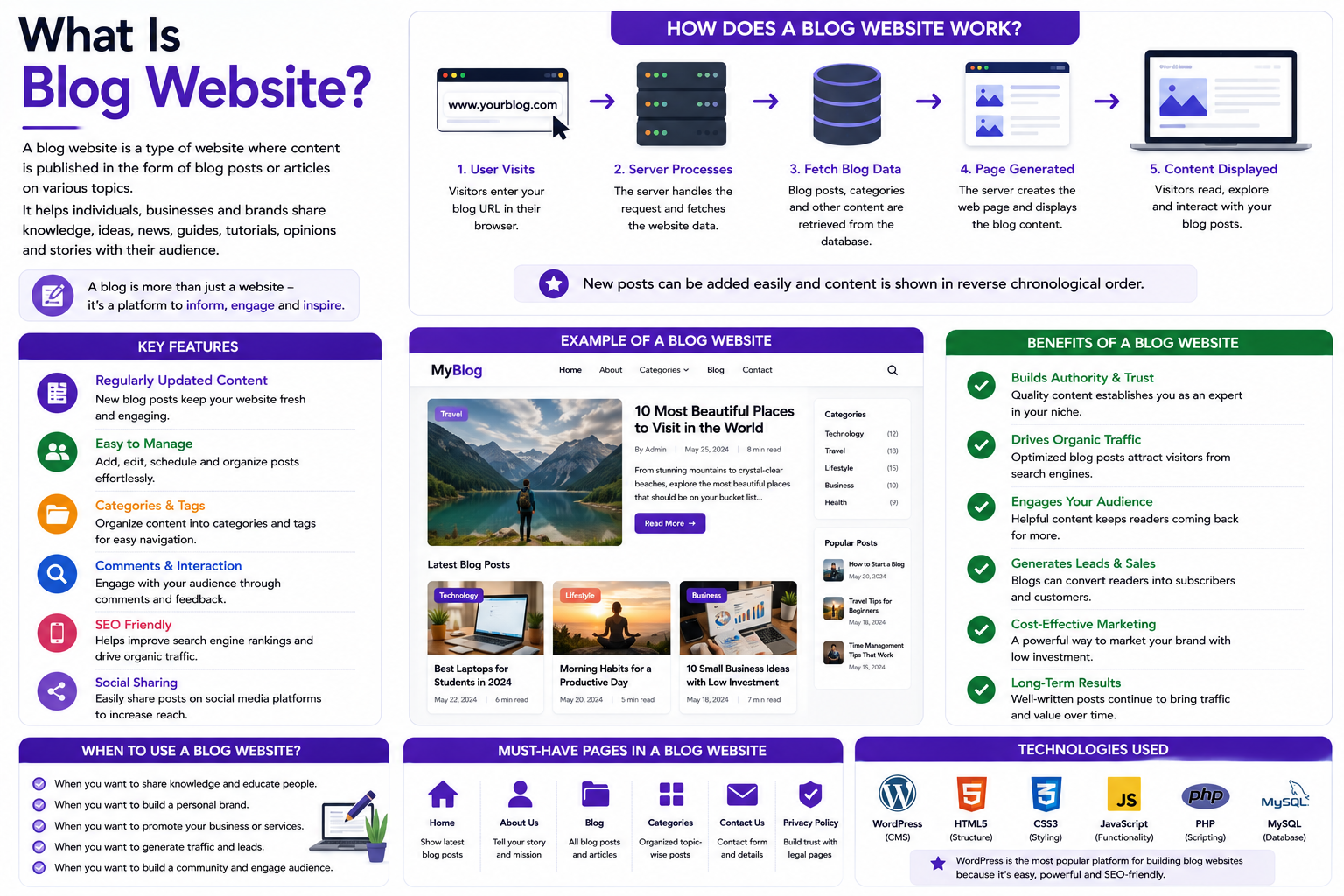
A blog website is used to publish articles, opinions, news, and informational content regularly. Bloggers share knowledge, experiences, and ideas through blog posts. Blog websites are popular for education, digital marketing, travel, technology, and lifestyle topics. Readers can also comment and interact with blog content online.
Examples:-
Medium
Blogger
E-Commerce Website
Social Media Website
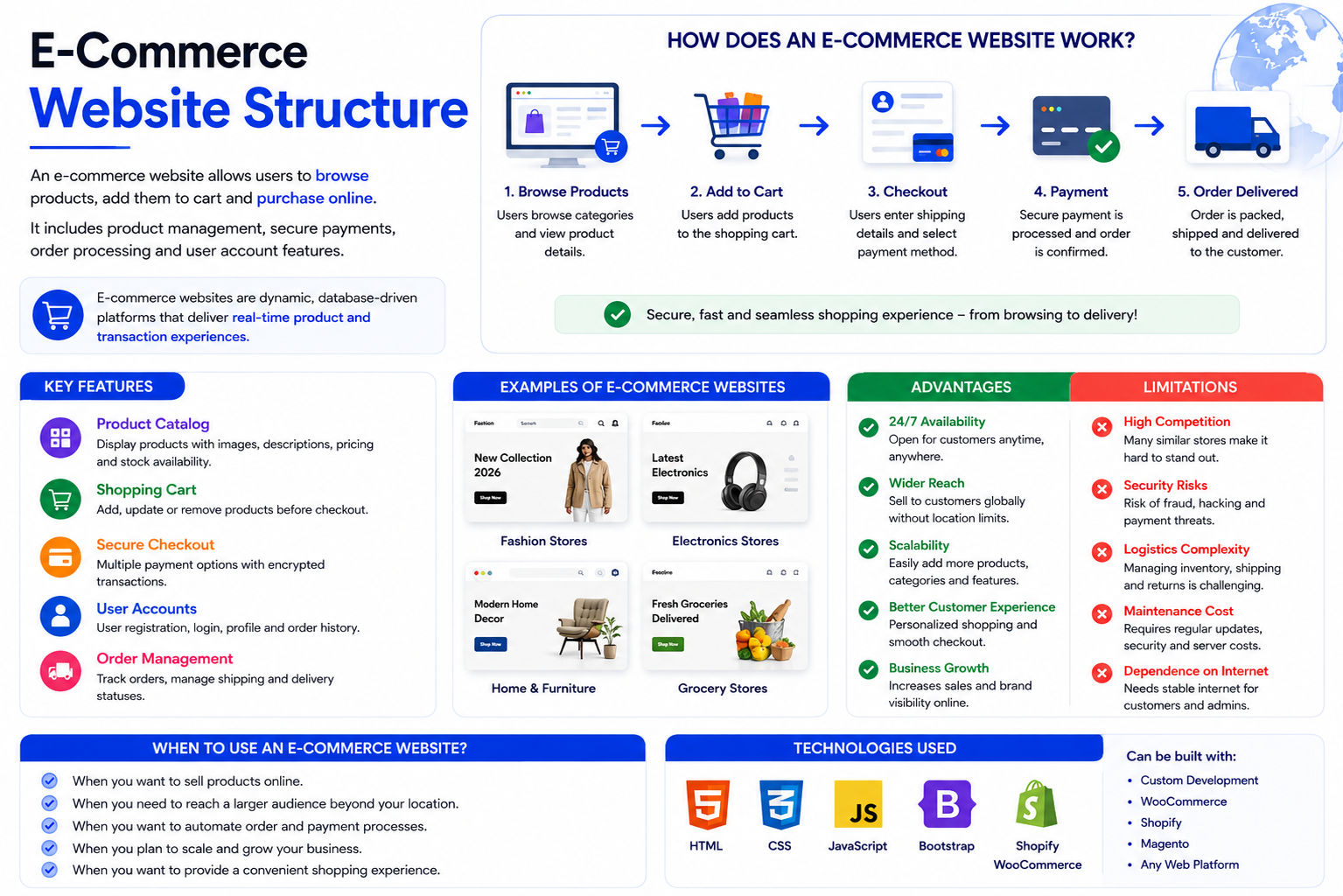
An e-commerce website allows users to buy and sell products or services online. These websites include product pages, shopping carts, payment gateways, and delivery options.
Examples:-
Amazon
Flipkart
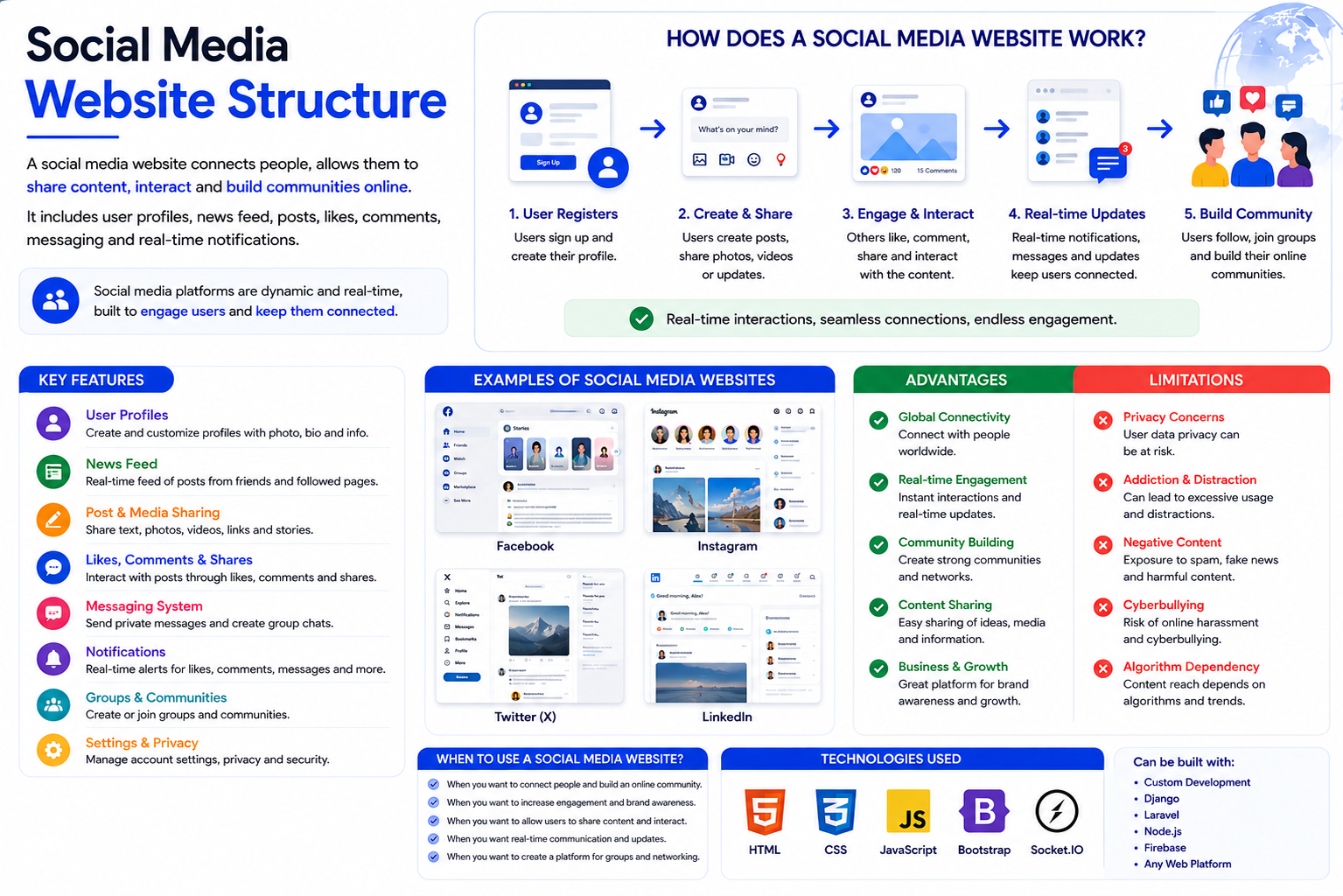
A social media website allows users to connect, communicate, and share content online. People can post photos, videos, messages, and updates with friends or followers.
Examples:-
Instagram
Facebook
Business Website
Educational Website


A business website is created to promote a company, its products, and services online. It helps businesses build trust, attract customers, and share company information. These websites usually include pages like Home, About, Services, and Contact. Business websites improve online presence and help companies grow in the digital market.
Examples:-
Apple
Tesla
An educational website provides learning materials, online classes, tutorials, and academic resources for students and teachers. These websites support online education and skill development. Educational websites are useful for schools, colleges, coaching institutes, and online learning platforms. They help users learn from anywhere through digital content and courses.
Examples:-
Coursera
Academy
Entertainment Website
Personal Website
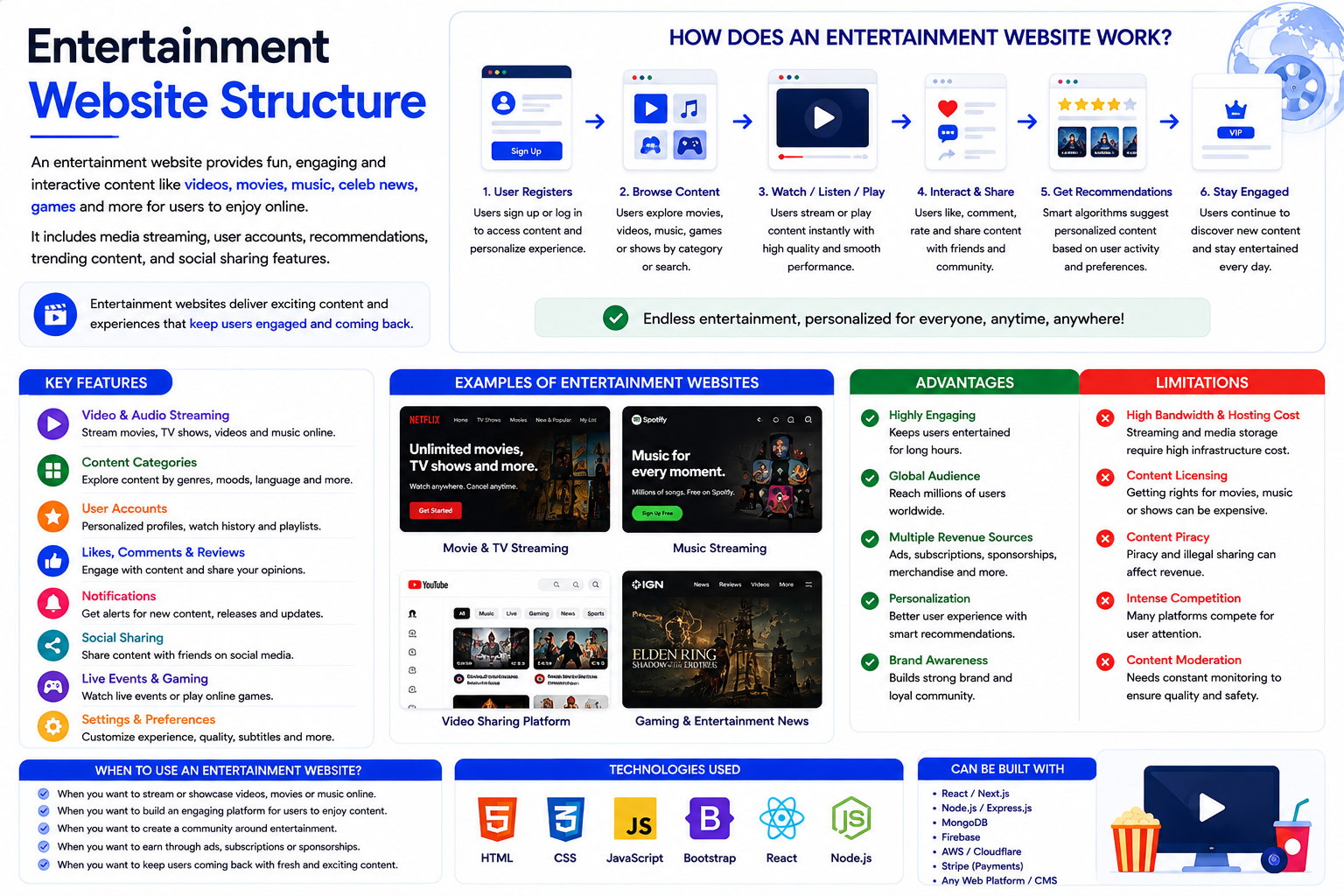
An entertainment website provides movies, videos, music, games, and other fun content for users. These websites are designed to entertain people and keep them engaged online.
Example:-
Youtube
Netflix
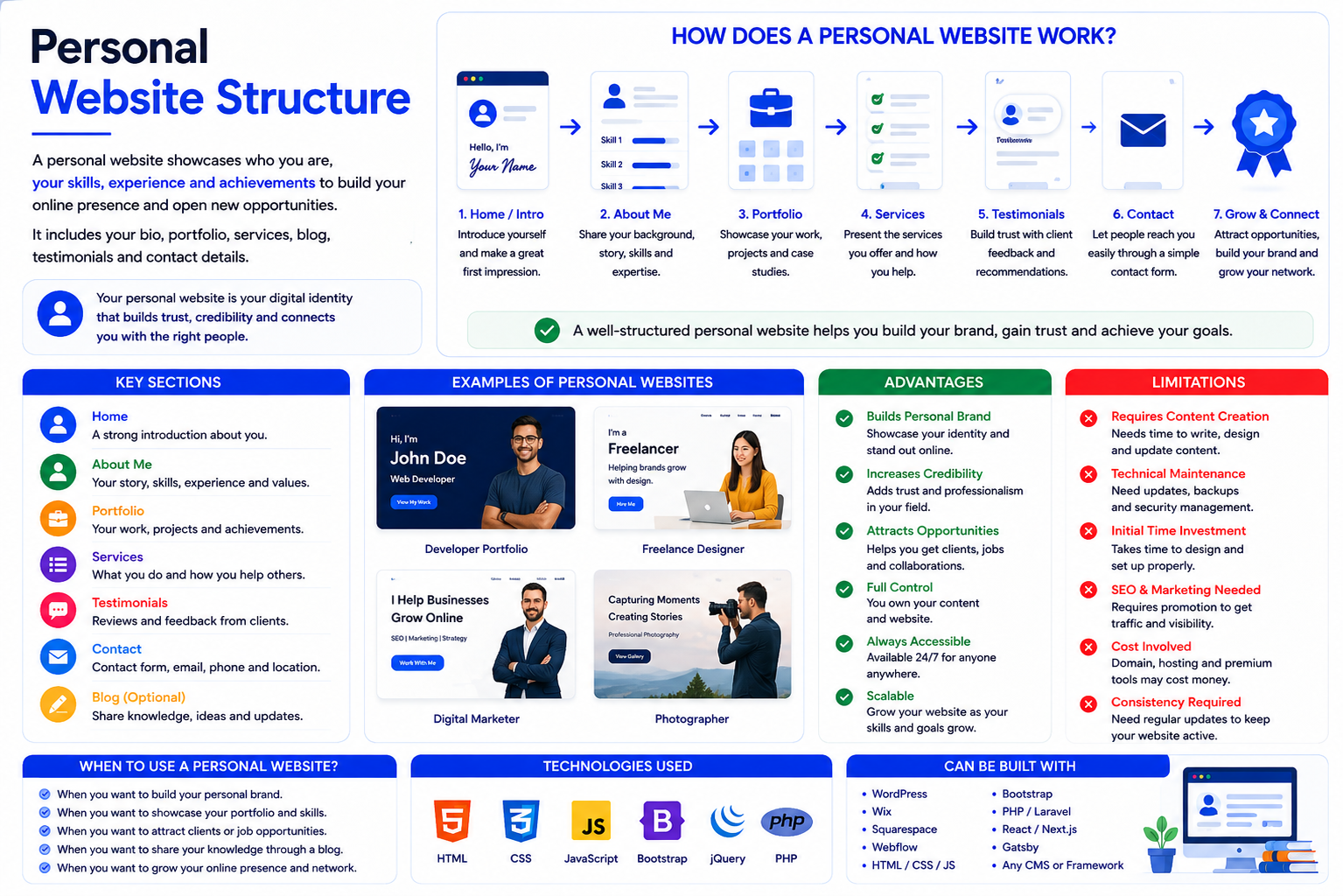
A personal website is created by an individual to share personal information, hobbies, resumes, or experiences online. These websites are used for self-promotion and building an online identity.
Example:-
Personal
blog website
Government Website
News Website

A government website provides official information, public services, notices, and online facilities for citizens. These websites are managed by government departments and organizations. People use them for forms, documents, updates, and public services. Government websites improve communication between the government and the public through digital platforms.
Examples:-
India.gov.in
USA.gov
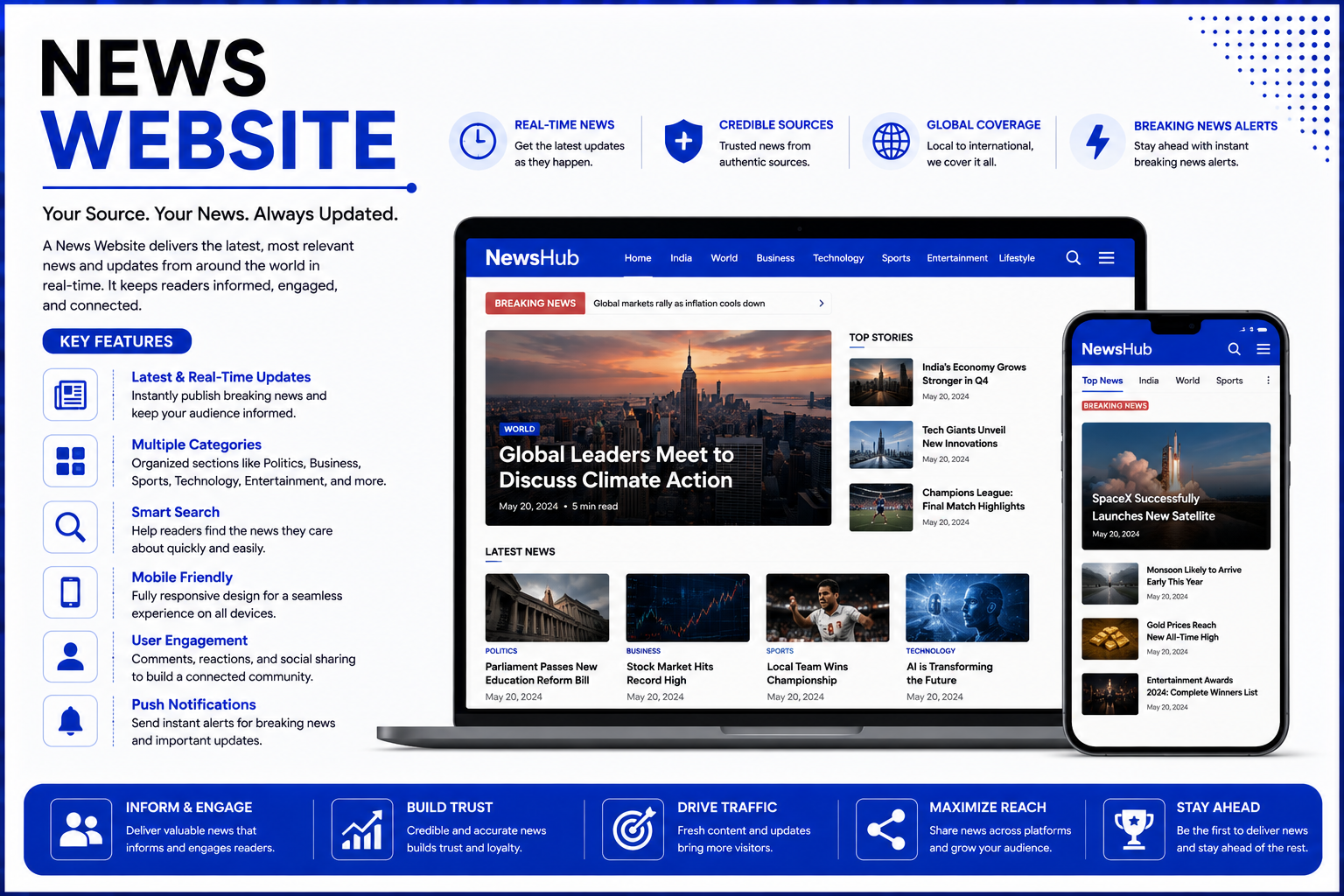
A news website publishes the latest news, reports, and updates from around the world. These websites cover topics such as politics, sports, business, technology, and entertainment. News websites help people stay informed about current events. They are updated regularly to provide fresh and accurate information to readers.
Examples:
BBC News
CNN
What Is URL?
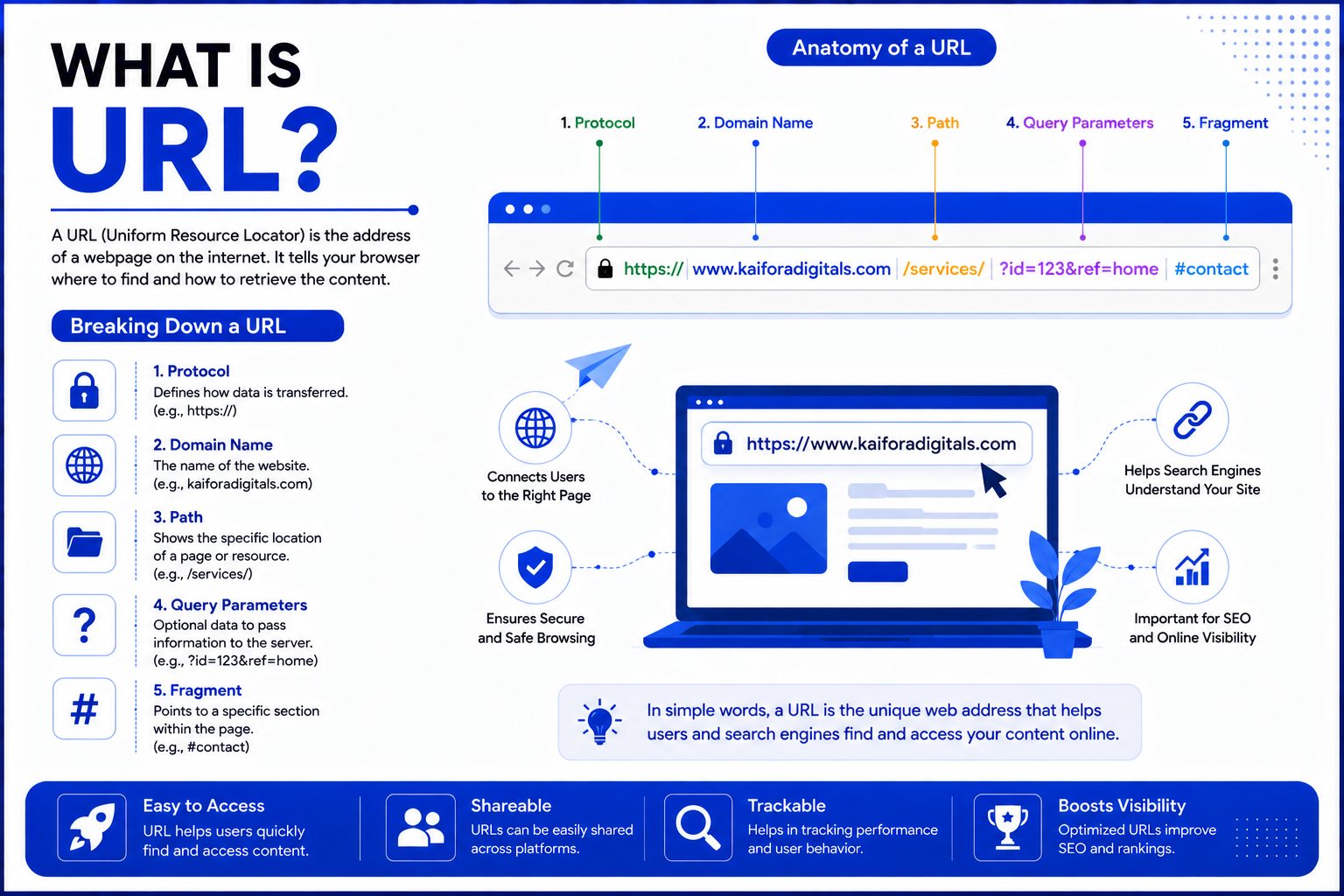
A URL (Uniform Resource Locator) is the complete web address used to locate and access a specific page, file, or resource on the internet. It tells web browsers exactly where a webpage is stored and how to retrieve it. For example, in the URL https://www.kaiforadigitals.com/services, https is the secure protocol, www.kaiforadigitals.com is the domain name, and /services is the specific page path.
A URL acts like the address of a house, helping users and search engines find the exact location of a webpage quickly and accurately. Every webpage, image, document, or video published online has its own unique URL. A well-structured URL is short, descriptive, easy to read, and often includes relevant keywords that improve both user experience and search engine optimization (SEO).
Using clean and organized URLs helps search engines understand website content more effectively while making it easier for visitors to navigate and share web pages.
Platforms & Tools We Use


Ready to Build Your Business Website ?
Ready to Build Your Business Website ? ->
Bring your ideas to life with a fast, responsive, and professionally designed website that helps your business grow, attract more customers, and establish a powerful online presence.